If there's one Holy Week celebration in the Valencian region of Turia that truly embodies tradition and evokes a sense of bygone days, it's undoubtedly the Holy Week of Castielfabib. These are days when the town embraces the traditions and folklore of its ancestors, with unique and exceptional customs.
The unique aspect of this Easter is undoubtedly the blend of pagan and religious acts in perfect harmony, despite its origin not being sufficiently documented.
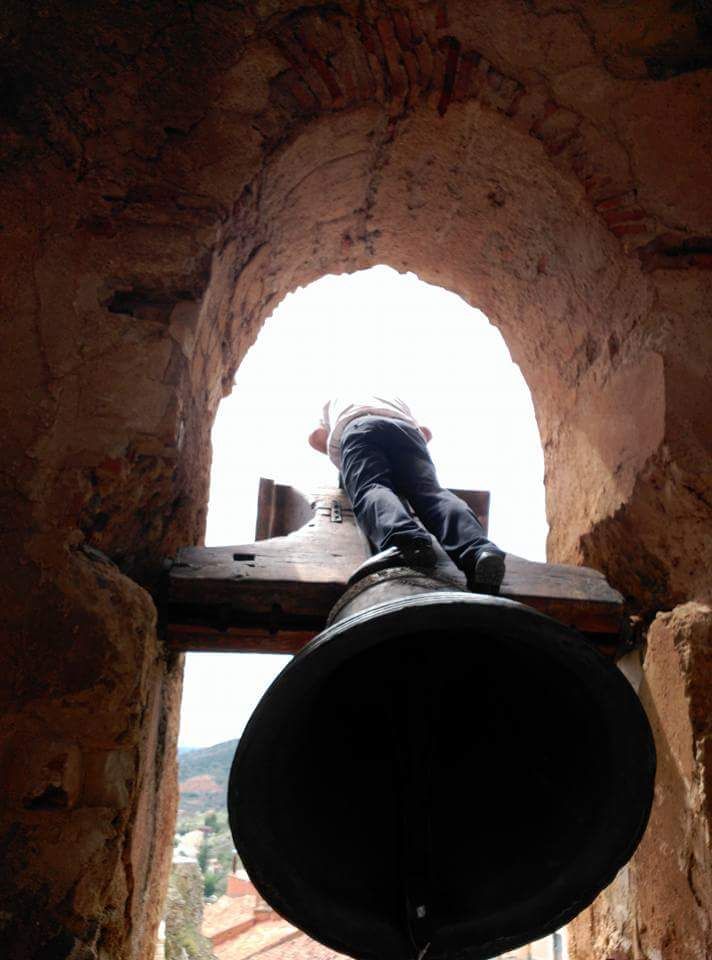
Cutting down the poplar trees, planting them in the Plaza, the singing of the Aurora, the making of the arches, the courtesies of Easter Sunday, the Mayorales and Mayoralesas are fundamental aspects of the festival; but one of the hallmarks is the ringing of bells and above all the human turning that takes place on Sunday morning.
- Palm SundayPalm Sunday marks the beginning of Holy Week. It is on this day that the names of the Mayorales and Mayoralesas, the young people responsible for leading all the activities in the coming days, are announced during Mass.
- Maundy ThursdayThursday is the prelude to the main days of the festival; this is when the preparations begin by the Mayorales, Mayoralesas, family members and neighbors so that everything is ready for the celebration of Easter in Castiel.
- Good FridayThis is the day the poplars are cut down on the banks of the Ebrón River and carried up to the town square on the shoulders of the local young men and women, to be "planted" the following day. Once there, the poplar trunks are peeled for the next day's planting.
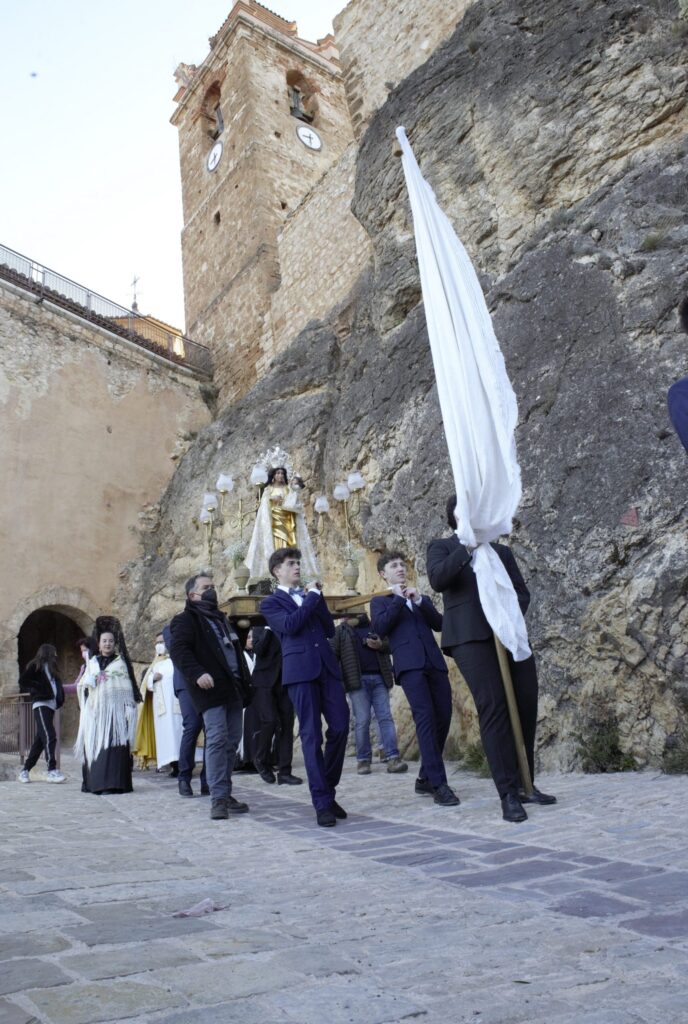
Once night falls, the Burial is celebrated, at which time the recumbent image of Jesus Christ and the Virgin of Sorrows are carried on the shoulders of Mayorales, accompanied by the Mayoralesas.
Originally, the trees were two pine trees that the foremen, with the support of family and neighbors, cut down and dragged by pack animals from the mountain to the Plaza de la Villa.
This tradition is associated with a pre-Christian rite related to fertility where spring was welcomed, in this case reconverted into another act of Holy Week.
- Holy SaturdayDuring the morning, the poplars are finished peeling, painted if necessary, and the holes where they will later be planted are dug. The final step is to place the tops of the tree trunks, also called "cocotas," emulating the origin of the tradition.
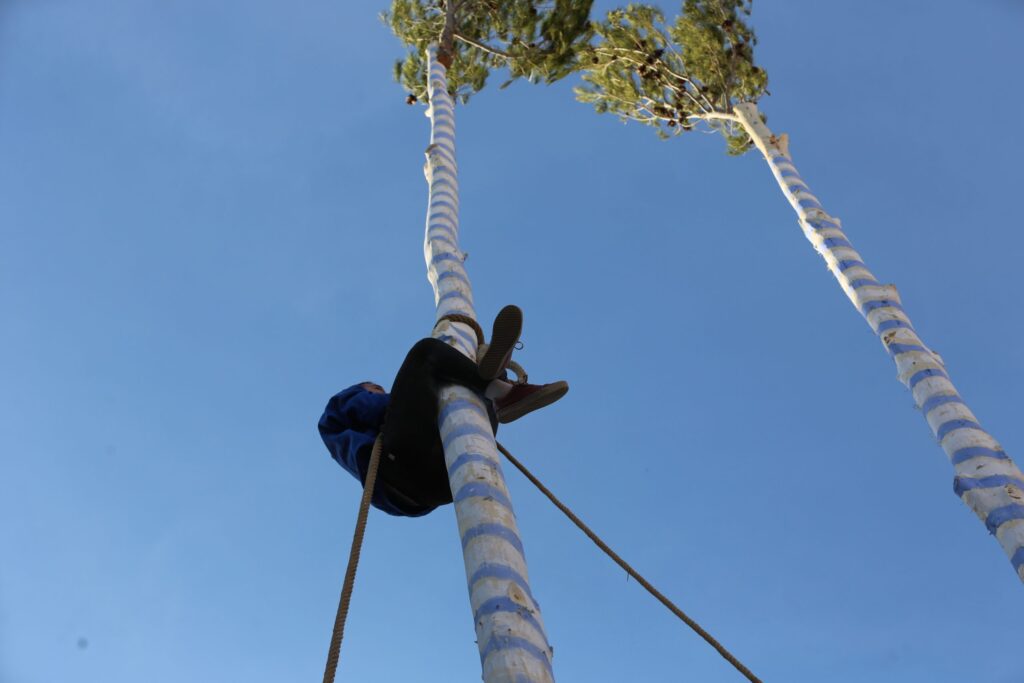
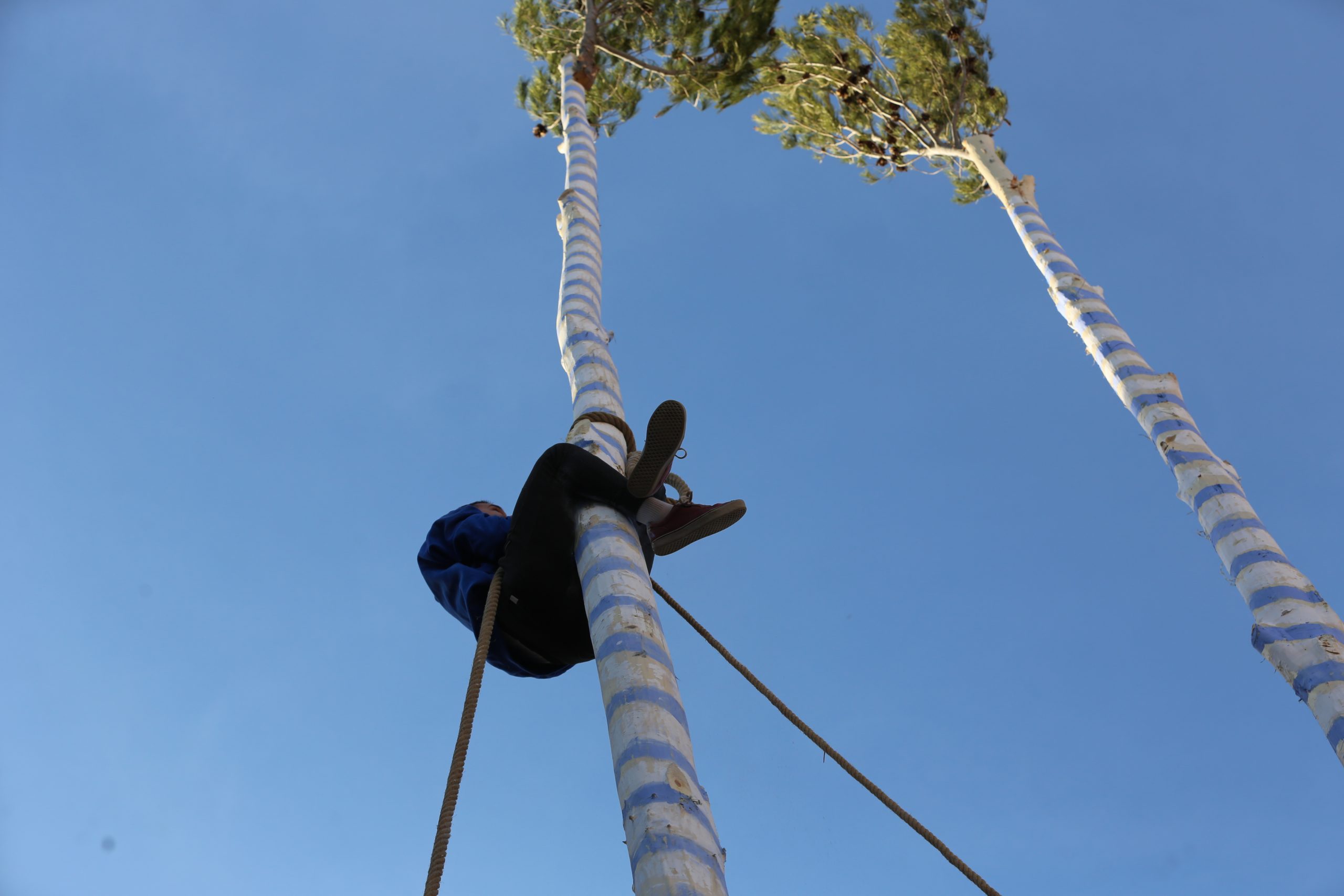
In the afternoon, the two poplar trees are "planted" with the help of the entire population, residents and visitors alike, amidst great tension and attention from everyone. It is only at the very end that a young man climbs up to untie the ropes used to raise the poplar.
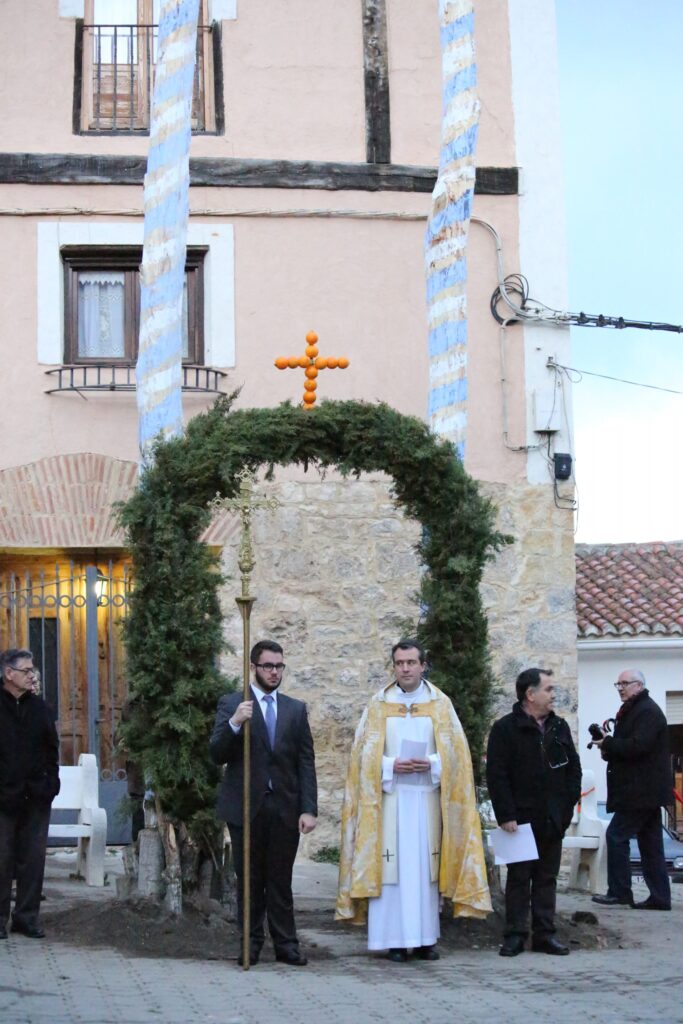
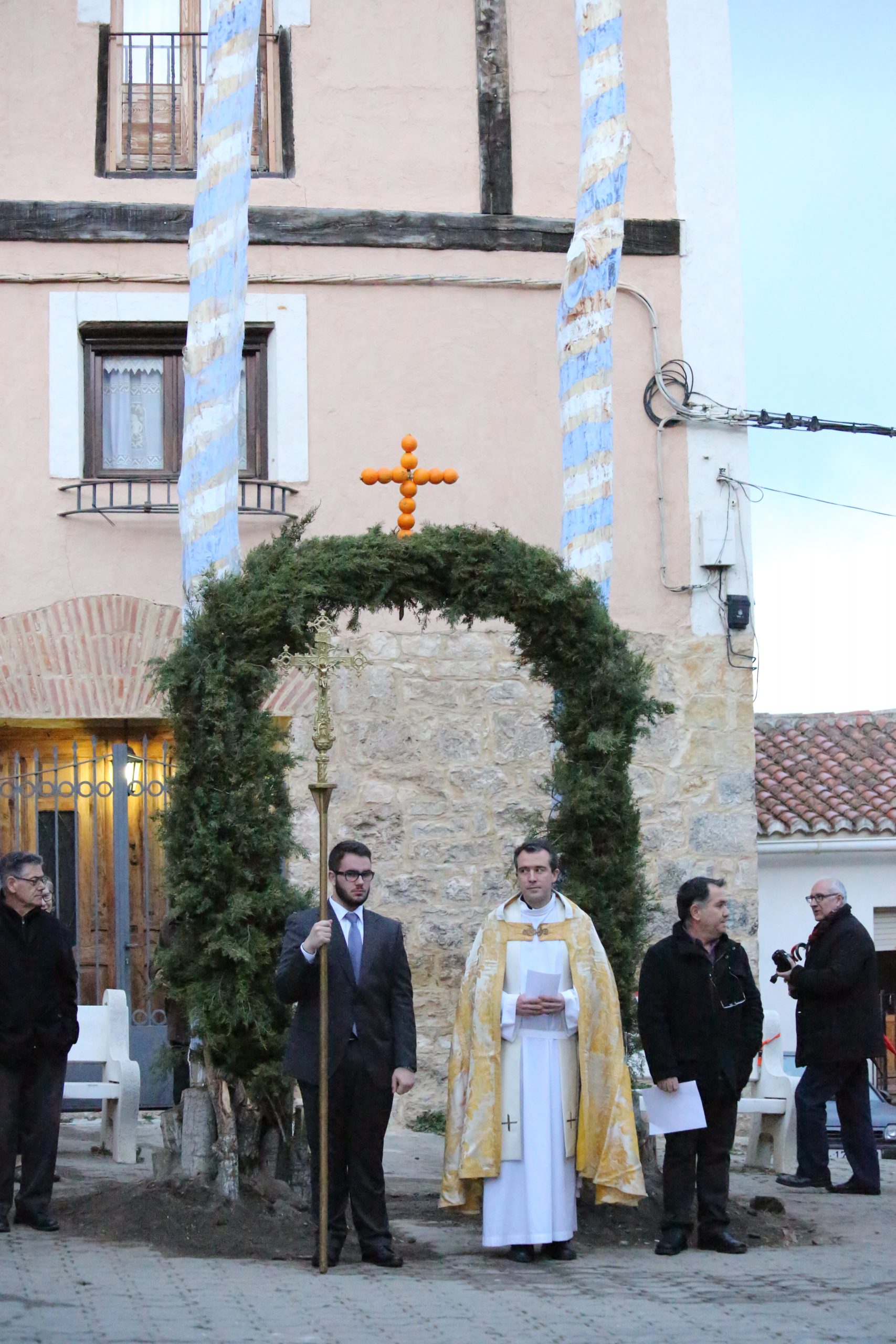
Meanwhile, during the day, three arches are made from vine and covered with juniper branches. The largest is placed between the two poplars already planted, topped with a cross of oranges or juniper. The other two arches are placed at the doorways of the Mayoralesas' houses.
At midnight, once Jesus Christ is resurrected according to tradition, the music begins that will liven up the evening.
It is said that in the past, these logs were painted with lime in a spiral pattern, alternating white with blue, green, or red, and gifts were hung on them as a reward for those who climbed up to collect them and untied the ropes as they passed. This tradition has recently been revived.
- Easter SundayAt 5:00 a.m., the "Song of the Dawn" begins, with serenades taking place at the homes of the Mayorales and Mayoralesas (the festival organizers). The group, made up of locals and visitors, is treated to pastries, sweets, and liqueurs.
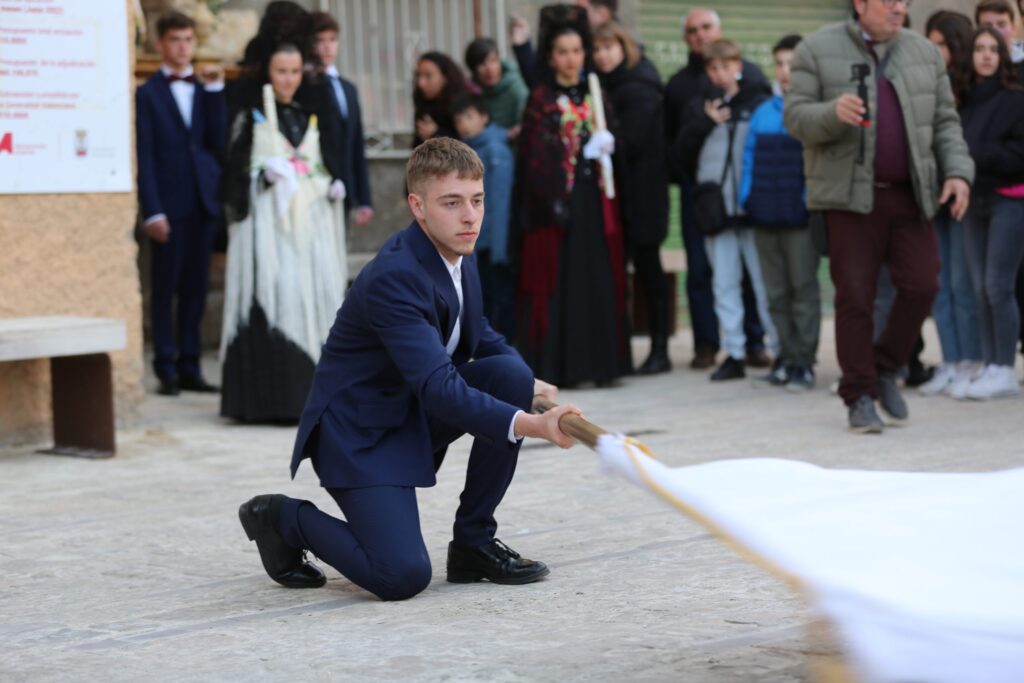
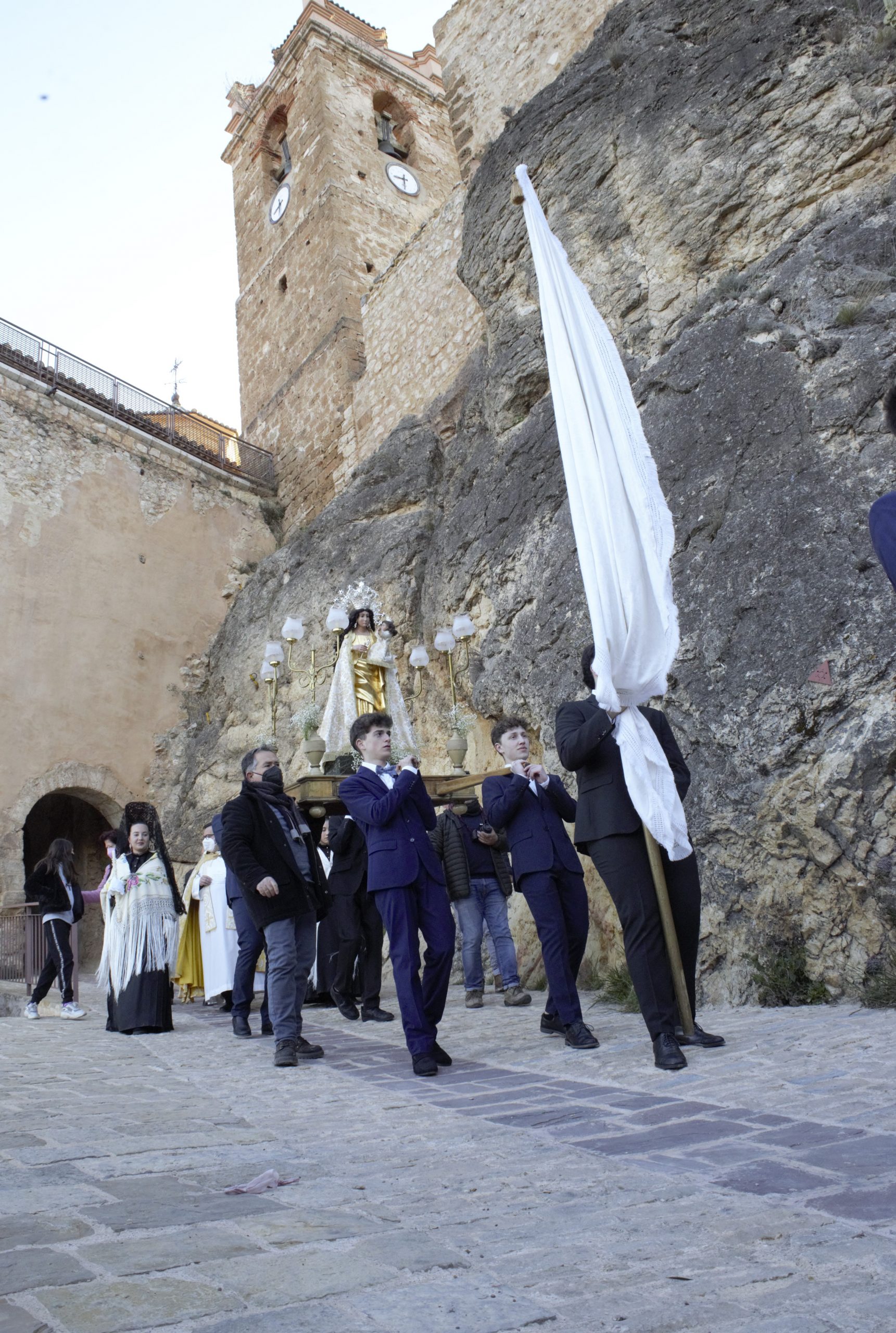
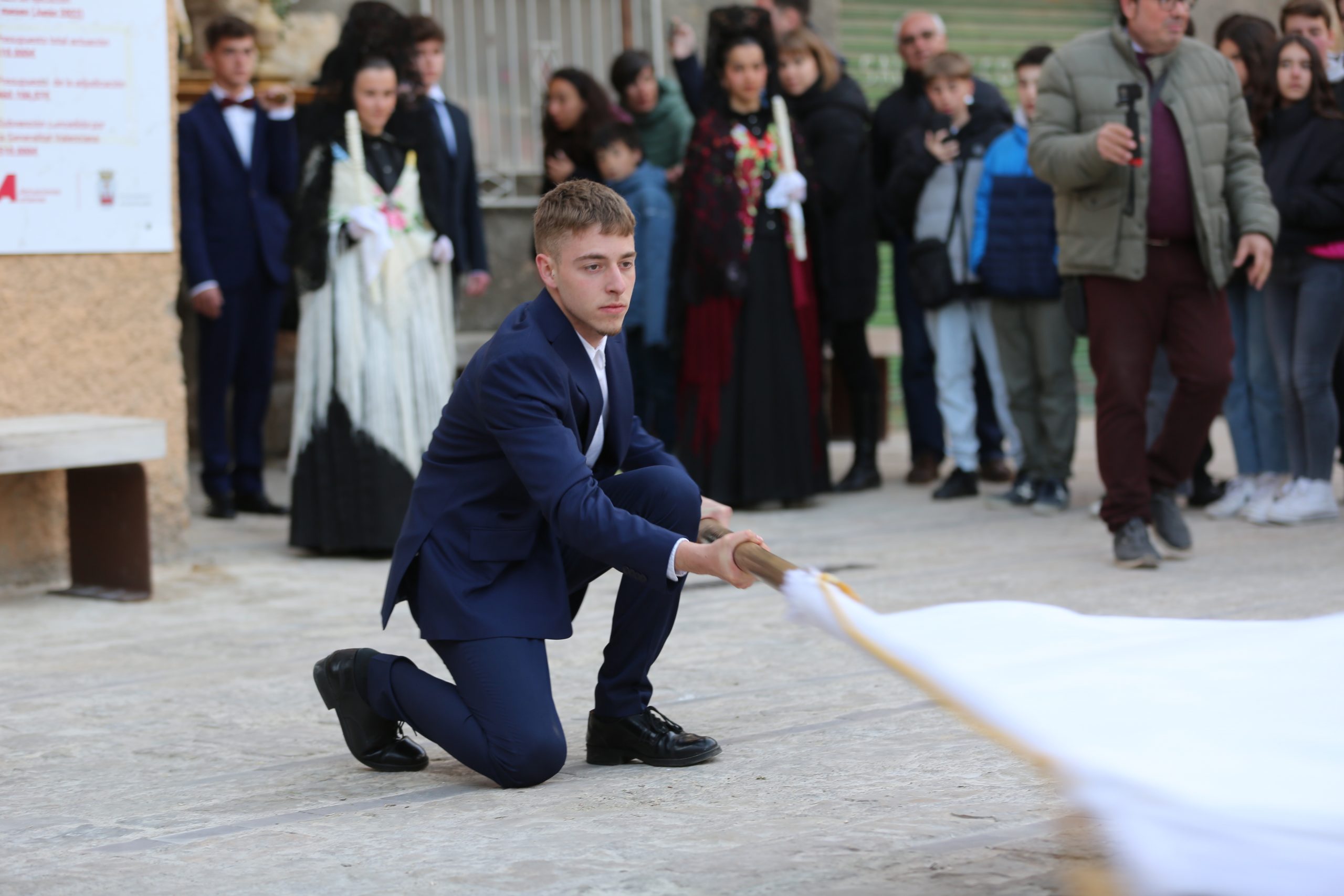
At 8:00 a.m., "The Encounter" takes place, where the Virgin Mary meets her son Jesus Christ under the arch of wicker and the poplar trees "planted" the day before in the Plaza de la Villa. The images are carried by the Mayorales (male and female members of the brotherhood) accompanied by the Mayoralesas (female members of the brotherhood), and before the Virgin enters the Plaza, a series of reverential bows are performed, known as the Cortesías. The Virgin is accompanied by "floreras" (flower girls) who scatter flowers as she passes. At the end of the Encounter, the song "Oh, what a morning of Easter" is sung.
Accompanying the procession is the ringing of the bells, with its unique human ringing. In this tradition, the young men of the village cling to the yoke of the Guillermina bell in the Church of Our Lady of the Angels to be swung around along with it.
After the mass, chocolate and cakes are offered to all those who wish to take part.
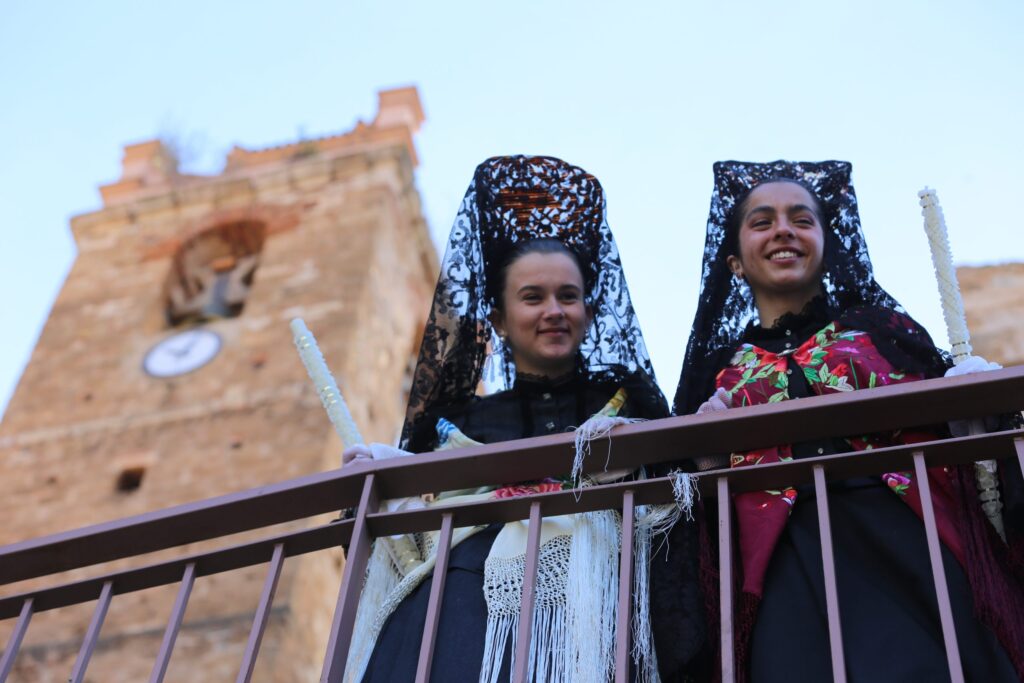
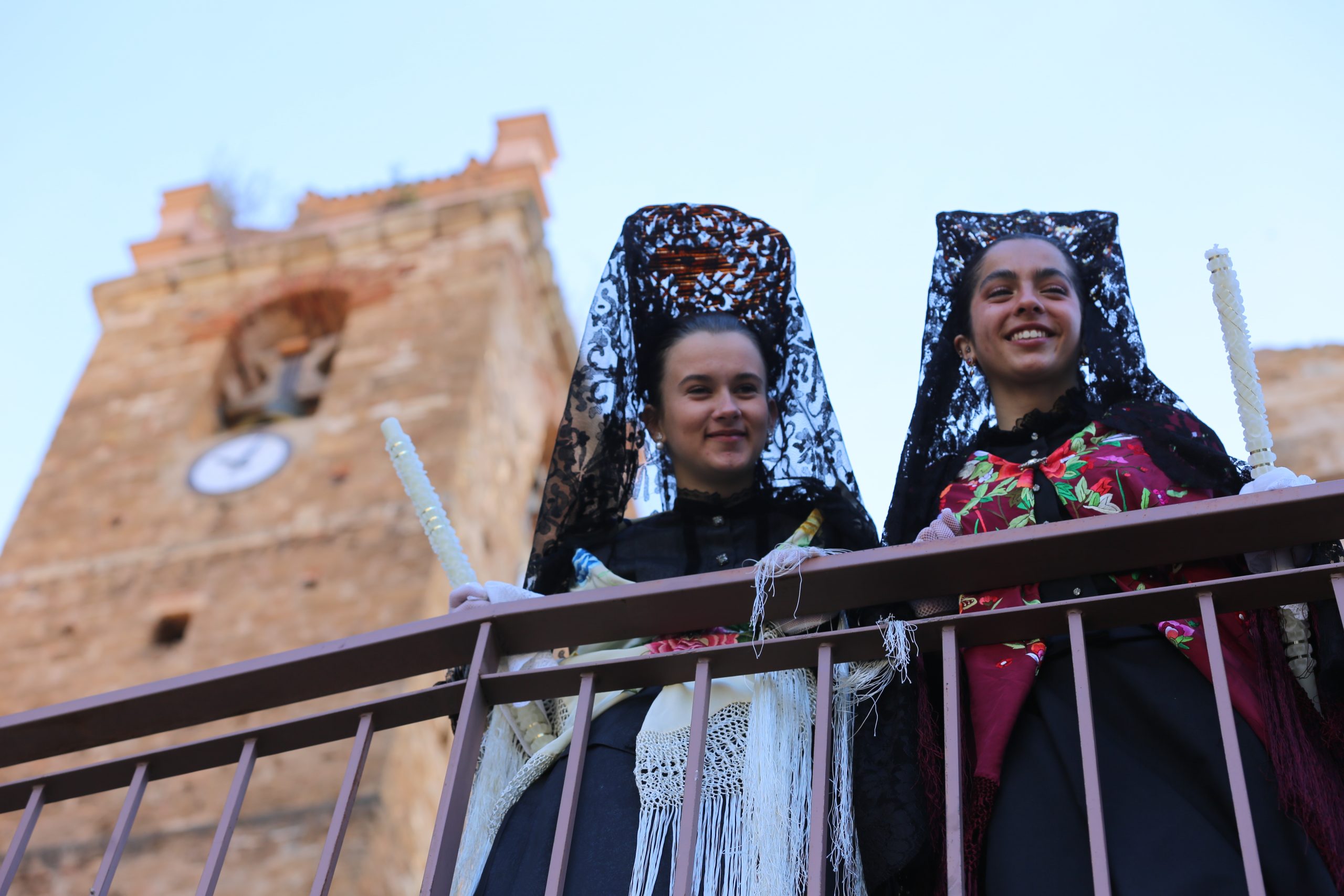
The women in charge of the festivities wear traditional attire consisting of a black skirt and bodice, a hair comb, a black mantilla, and a shawl. The men wear suits, although they previously wore the traditional clothing of the region, a part of the tradition that is currently being researched for revival.